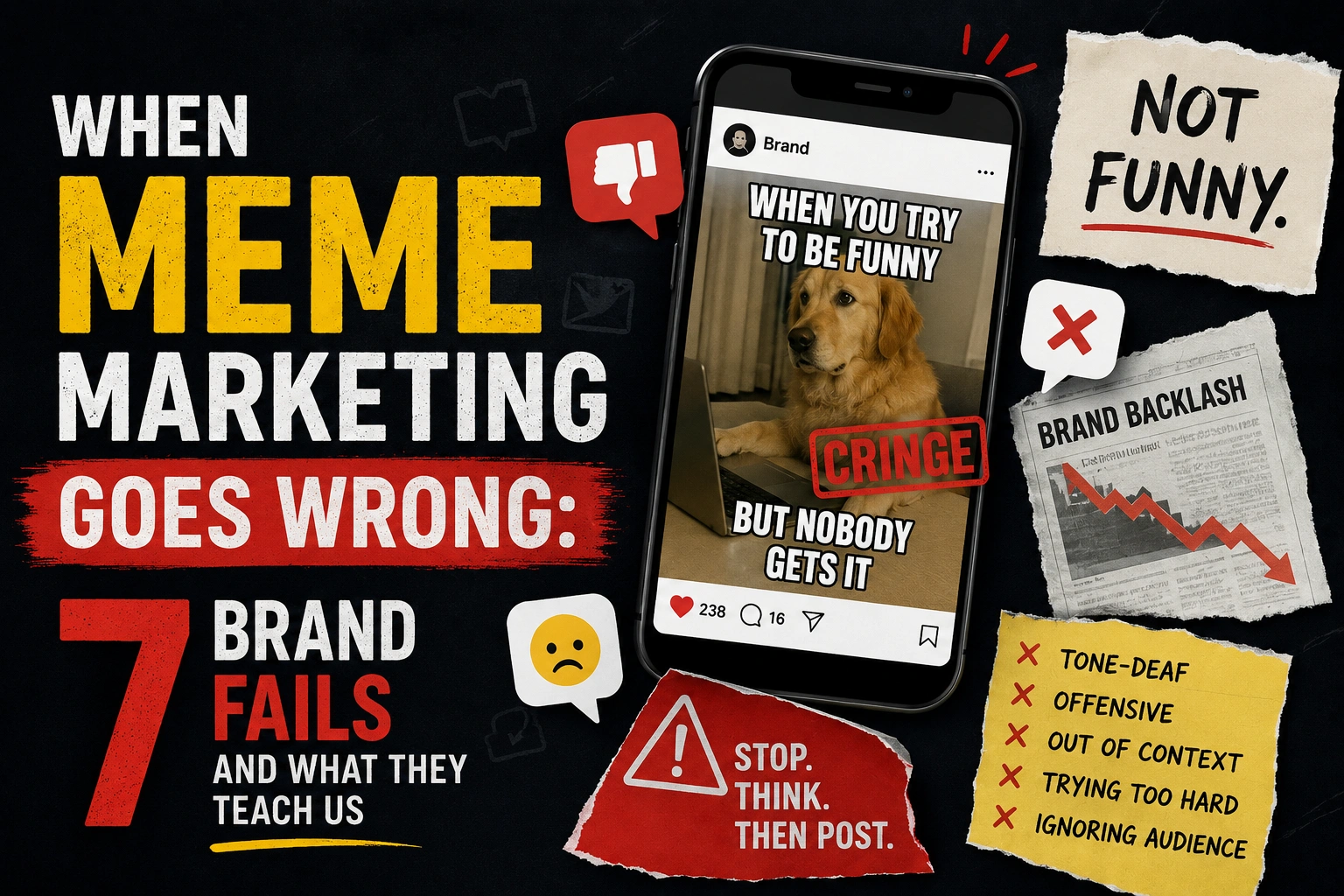
When Meme Marketing Goes Wrong: 7 Brand Fails and What They Teach Us
Meme marketing has one of the best risk-to-reward ratios in the modern marketing playbook — when it works. A well-timed meme can outperform a paid ad campaign for a fraction of the cost. But the same qualities that make memes powerful — speed, cultural relevance, humor, and shareability — are exactly what make them dangerous in the wrong hands.
The brands below didn't lack budget, creativity, or social media teams. They misjudged timing, tone, or context — and the internet made sure everyone noticed. Here are seven real meme marketing fails, and the specific lesson each one leaves behind for anyone planning a 2026 content calendar.
1. Gap's Election Day "Unity" Hoodie
What happened: On the night of the 2020 US presidential election, Gap posted an image of a hoodie split half-blue and half-red being zipped together, framed as a symbol of the two political sides coming together.
Why it flopped: The timing was the problem, not the sentiment. Coming after months of heightened political tension, the post read as a brand trying to profit from a moment people were still living through, and the reaction was widespread accusations that Gap was being tone-deaf and pushing a false sense of balance.
The lesson: "Both sides" content rarely lands during genuinely divisive moments. If your brand doesn't have a real stake in a cultural or political event, sitting it out is usually safer than trying to meme your way into relevance.
2. DiGiorno's #WhyIStayed Hijack
What happened: When the hashtag #WhyIStayed began trending as a space for domestic abuse survivors to share their experiences, DiGiorno Pizza jumped on the trending tag with a joke tying it to pizza — without checking what the hashtag was actually about first.
Why it flopped: Trend-jacking without context turned a brand joke into a serious PR incident. The backlash was immediate, and DiGiorno had to issue a public apology.
The lesson: Before joining any trending hashtag or format, spend two minutes checking what it actually means. A trending tag isn't automatically safe for a brand voice — some of the fastest-moving trends are the ones brands should never touch.
3. American Apparel's Disaster-Timed Promotions
What happened: As Hurricane Sandy battered the US East Coast, American Apparel emailed a discount code to customers in affected states, encouraging them to shop online while stuck indoors. Years later, the same company reposted an artistic-looking photo of the Space Shuttle Challenger explosion on its Tumblr, tagged with lifestyle hashtags, without recognizing the image.
Why it flopped: Both incidents shared the same root failure — a brand publishing content into a real crisis or tragedy without pausing to check what it actually was, or how it would land with anyone affected by it.
The lesson: Build a "sensitive events" checklist into your social approval process. Anything referencing a disaster, tragedy, or ongoing crisis needs a second set of eyes — ideally someone senior enough to say no.
4. KitchenAid's Personal-Account Mix-Up
What happened: During a live-tweeted presidential debate, an employee managing KitchenAid's official Twitter account accidentally posted a crude political joke about a candidate's late grandmother, intending to send it from their personal account instead.
Why it flopped: The mistake wasn't really about meme content at all — it was about access control. One person could post to a major brand account with no review step in between.
The lesson: Never let a single person post to brand social accounts without some form of review, delay, or dual sign-off — especially during high-attention live events like debates, award shows, or breaking news, when the temptation to post something reactive is highest.
5. The "Fellow Kids" Trend-Chasing Problem
What happened: A recurring pattern across dozens of brands: taking an already-aging meme format or slang term and forcing it into branded content months after its cultural peak, usually with stiff, over-explained execution.
Why it flopped: Audiences can tell the difference between a brand that's genuinely online and one that's performing "relatability" from a content calendar built weeks in advance. Outdated formats read as try-hard rather than funny, and the backlash label — "how do you do, fellow kids" — has become internet shorthand for exactly this mistake.
The lesson: Meme marketing has a short shelf life. If a format is already common enough that your marketing team has heard of it, you may already be too late — speed and cultural fluency matter more than production polish.
6. Waitrose's Open-Ended Hashtag Campaign
What happened: UK supermarket Waitrose launched a hashtag campaign inviting customers to finish the sentence "I shop at Waitrose because ___," expecting warm, on-brand responses.
Why it flopped: Instead, the majority of replies mocked the supermarket's upmarket reputation, turning the hashtag into a running joke about classism rather than a testimonial campaign. To the brand's credit, its team responded with good humor rather than deleting the campaign in a panic.
The lesson: Any open-ended, fill-in-the-blank prompt is an invitation for your audience to subvert it — especially if your brand has a strong existing reputation or stereotype attached to it. Pressure-test the prompt internally by imagining the least flattering possible response before you launch it.
7. The Recurring 9/11 Marketing Problem
What happened: Nearly every year, multiple brands — from pharmacy chains to phone carriers to clothing retailers — post 9/11 "tribute" content that incorporates their logo, product, or branding into imagery of the Twin Towers or the American flag.
Why it flopped: Even well-intentioned tribute posts get read as brands using a tragedy for visibility, because the branding is impossible to separate from the sentiment. This has happened often enough that it's become an annual case study in what not to do on social media.
The lesson: Some days and topics should get zero brand marketing, full stop — not a softened version, not a logo in the corner, not a "risk-free" tribute post. If a moment is genuinely solemn, the most respectful post is often no post at all.
What These 7 Fails Have in Common
Pull these cases apart, and the same three root causes show up again and again:
- No context check. Nearly every fail above came from a brand reacting to a trend, hashtag, or moment without spending five minutes understanding what it actually meant to the people already talking about it.
- No second reviewer. Whether it's a single employee with account access or a campaign that skipped a sanity check, the fastest way to a viral fail is removing friction from the approval process at exactly the wrong moment.
- Confusing speed with recklessness. Meme marketing does reward fast turnaround — but fast doesn't mean unreviewed. The best meme-marketing teams build a lightweight, same-day approval process specifically so they can move quickly without moving blindly.
How to Meme-Proof Your Brand
- Build a red-flag list. Tragedies, active crises, sensitive anniversaries, and ongoing political controversies should trigger an automatic pause, not a quick joke.
- Assign a "context checker." Before jumping on any trend or hashtag, have one person specifically responsible for confirming what it's actually about.
- Keep a same-day approval lane. Separate your meme and trend-jacking content from your standard content calendar so it can move fast — through at least one other person — without waiting on a full campaign review cycle.
- Pressure-test open prompts. Before launching any fill-in-the-blank or hashtag campaign, brainstorm the worst-case responses internally first.
- Know when to sit it out. Not every trend needs your brand's voice attached to it. The strongest meme marketing teams say no far more often than they say yes.
FAQs on Meme Marketing Fails
Why does meme marketing go wrong so often?
Because it trades on speed and cultural timing, which leaves little room for the review processes that catch mistakes in traditional campaigns. Most fails come from brands reacting to a trend without fully understanding its context.
Can a brand recover from a meme marketing fail?
Yes, in most cases. Quick acknowledgment, a genuine apology when warranted, and — often — good-humored engagement with the backlash (rather than silence or deletion) tend to limit long-term damage.
How can brands avoid meme marketing mistakes?
Build a lightweight but real review process specifically for trend-jacking content, maintain a list of topics that are always off-limits, and make sure no single person can publish to brand accounts without any oversight.
Is meme marketing still worth the risk in 2026?
Yes — done well, it remains one of the highest-engagement, lowest-cost content formats available. The brands that get burned are almost always the ones skipping context and review, not the format itself.