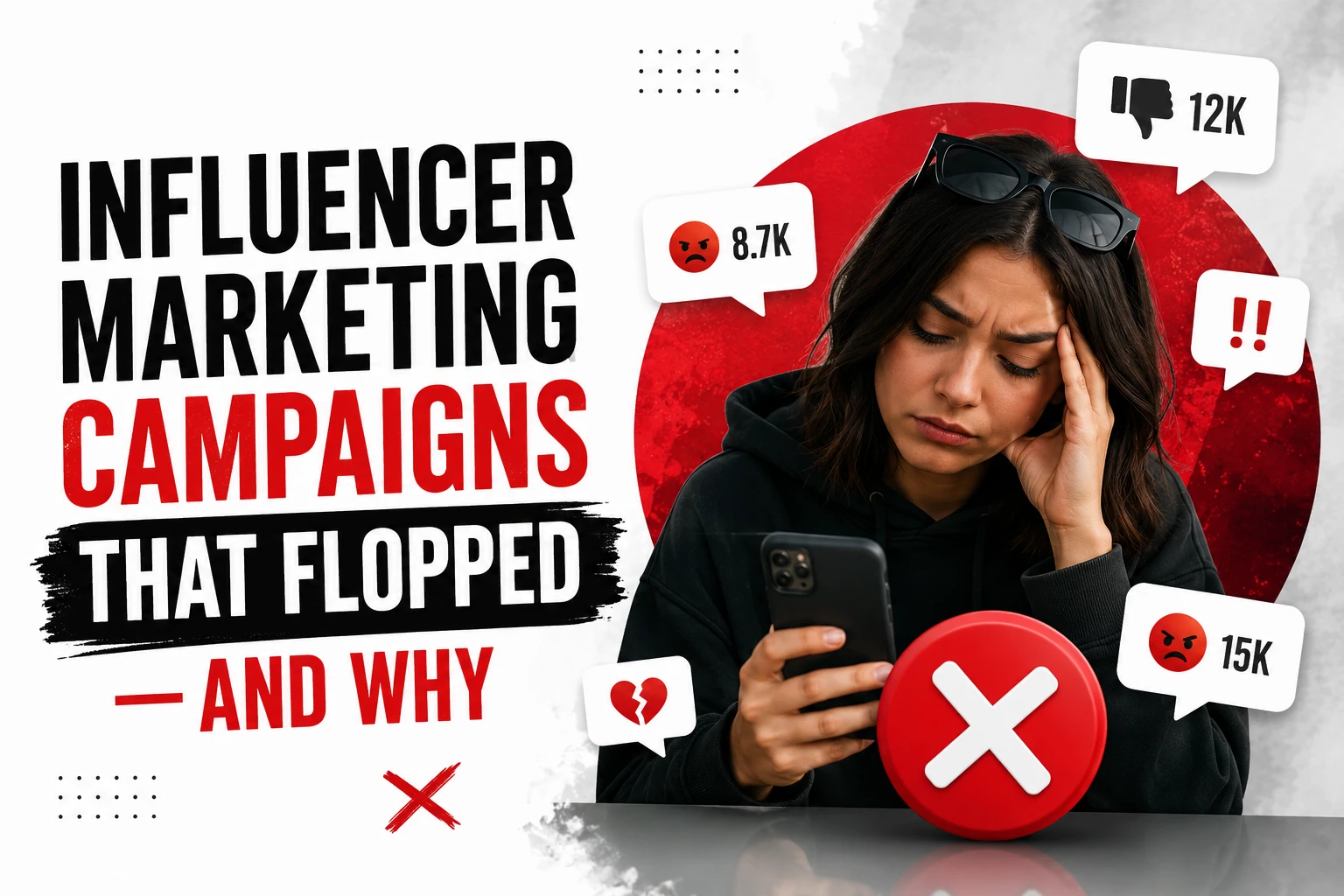
Influencer Marketing Campaigns That Flopped — And Why
Influencer marketing works because it borrows trust — a creator's audience already believes in them, and that belief transfers to whatever they endorse. That's also exactly what makes it so risky. When the product doesn't hold up, when the influencer doesn't follow through, or when a brand skips basic vetting, that same borrowed trust turns into borrowed backlash — and it lands on the brand at least as hard as it lands on the creator.
Here are six real influencer marketing campaigns that flopped, and the specific, avoidable mistake behind each one.
1. Fyre Festival: When Hype Has No Foundation
What happened: In 2017, Fyre Festival organizers paid roughly 400 influencers and models — including Kendall Jenner, who reportedly received around $250,000 for a single Instagram post — to promote what was billed as a luxury music festival on a private Bahamian island. The campaign was, by pure marketing metrics, extraordinary: one coordinated wave of posts reached hundreds of millions of people within 48 hours and helped sell out tickets almost instantly.
Why it flopped: The festival itself didn't exist in any form close to what was promised. Attendees arrived to disaster-relief tents instead of villas, and pre-packaged sandwiches instead of the gourmet meals they'd paid thousands of dollars for. Because most of the influencers hadn't disclosed they were paid to promote the event, and many hadn't verified any of the festival's actual claims, several faced legal scrutiny once the fraud became public.
The lesson: No amount of influencer reach can compensate for a product or event that doesn't exist. Marketing can create demand, but it can't substitute for a real deliverable — and brands (and the influencers working with them) carry real legal and reputational exposure when the claims being promoted aren't true.
2. Scott Disick's Copy-Pasted Caption
What happened: While promoting Bootea, a weight-loss tea brand, reality TV personality Scott Disick posted a caption that included the brand's literal instructions to him — something to the effect of the exact wording he was supposed to write and the specific time to post it — without editing any of it out.
Why it flopped: The post made it instantly obvious that Disick had no genuine experience with or opinion about the product — he'd simply copy-pasted the brief. Rather than reading as an authentic endorsement, it exposed the mechanics of the sponsorship in the least flattering way possible.
The lesson: Audiences can tell the difference between genuine enthusiasm and a copy-pasted brief, and a review step before anything goes live isn't optional — it's the only thing standing between a brand and a public embarrassment. If a brand's brief is detailed enough to be copy-pasted verbatim into a caption, it's too scripted to begin with.
3. Kim Kardashian and the Diclegis FDA Warning
What happened: Kim Kardashian posted a sponsored Instagram endorsement for Diclegis, a prescription morning-sickness medication, describing positive results and stating there was no increased risk to the baby — but without including the drug's required risk and side-effect information.
Why it flopped: The FDA issued a formal warning letter to the drug's manufacturer, stating the post was misleading because it presented the drug's benefits without any of its legally required risk disclosures. The post had to be taken down and reposted with full safety information.
The lesson: Regulated categories — pharmaceuticals, financial products, health claims — carry specific legal disclosure requirements that apply to influencer content exactly as they apply to traditional advertising. Any brand operating in a regulated space needs a compliance review step in its influencer approval process, not just a brand-voice review.
4. Snapchat's Spectacles Deal That Never Fully Delivered
What happened: Snapchat's marketing partner signed influencer Luka Sabbat to promote its new Spectacles product, with a contract requiring him to post multiple Instagram stories and a feed post wearing the product at fashion week events.
Why it flopped: Sabbat posted only a fraction of the agreed content and skipped the fashion-week appearances entirely, without submitting his post for approval as the contract required. Snapchat's team sued him for breach of contract — an unusually public and messy outcome for what should have been a straightforward brand deal.
The lesson: Verbal understanding isn't enough — deliverables, timelines, and approval steps need to be spelled out in a clear, enforceable contract, with a way to verify the work actually happened before payment is released.
5. PewDiePie: When Brand Safety Wasn't Actually Checked
What happened: Felix Kjellberg, known as PewDiePie and at the time YouTube's most-watched creator, posted a series of videos in late 2016 and early 2017 containing antisemitic jokes and Nazi imagery. Once the pattern was reported publicly, Disney's Maker Studios ended its partnership with him, and YouTube pulled his show and removed him from its premium advertising program.
Why it flopped: Brands and platforms had built major, lucrative partnerships around Kjellberg's massive audience without fully accounting for the risk that his off-brand, provocative content style could cross a line that damaged everyone attached to him. Once it did, the fallout extended well beyond his own channel to every brand associated with him.
The lesson: A creator's follower count and typical brand-safe content don't guarantee their overall body of work — or future behavior — is brand-safe. Ongoing content review, not just an initial vetting pass, matters for any long-term creator partnership, especially with high-profile, high-reach influencers whose style leans provocative.
6. Bud Light's Audience Mismatch and Crisis Response
What happened: In 2023, Bud Light ran a short influencer partnership involving transgender content creator Dylan Mulvaney, which was intended as a small part of a broader marketing push. The partnership drew significant, polarized public reaction — a segment of the brand's traditional customer base pushed back strongly, while the brand's handling of the backlash subsequently drew criticism from other quarters as well.
Why it flopped: Regardless of the intent behind the partnership, the campaign wasn't tested against how the brand's core, existing customer base would likely react, and the company's public response to the backlash was widely seen as unclear and reactive rather than prepared. The episode is now a frequently cited case study in marketing courses on both audience-fit analysis and crisis communications planning — less about the specific partnership choice itself and more about the absence of a clear plan for how to communicate if backlash occurred.
The lesson: Any partnership with the potential to be polarizing needs two things worked out in advance: a clear-eyed read on how the brand's actual core audience is likely to react, and a communications plan ready to go the moment backlash starts — rather than improvising a response in real time.
What These 6 Flops Have in Common
Different as they are, the same handful of root causes show up across every case:
- Skipped verification. Whether it's confirming a festival could actually deliver on its promises or confirming a creator's full content history, several of these fails came from brands (or influencers) taking claims at face value.
- Missing review steps. A caption review, a legal/compliance check, a contract with clear deliverables — in each case, one extra checkpoint would likely have caught the problem before it went public.
- No plan for backlash. The brands that recovered fastest from these situations were the ones with a clear, quick response ready. The ones that struggled longest were often still figuring out what to say once the story had already spread.
How to Avoid Becoming the Next Case Study
- Vet the whole creator, not just their top content. Review a meaningful sample of a potential partner's history, tone, and past controversies — not just the polished pieces in their media kit.
- Put deliverables and approval steps in a real contract. Specify exactly what content is required, when, and who signs off before it goes live and before payment is released.
- Build a compliance check into regulated-category campaigns. If the product is medical, financial, or otherwise regulated, involve legal or compliance review before any influencer content is approved.
- Review scripts and briefs for anything too literal. If a brief reads like it could be copy-pasted directly into a caption, rewrite it as talking points instead of finished copy.
- Pressure-test audience reaction before launch. Ask, honestly, how the brand's actual core customers are likely to respond — not just how the campaign looks in a pitch deck.
- Have a crisis response drafted before you need it. A short, ready plan for who responds, what gets said, and how fast, turns a potential spiral into a contained incident.
FAQs on Failed Influencer Marketing Campaigns
What's the most common reason influencer campaigns fail? Skipped verification and review — of the influencer's history, the product's actual claims, or the content itself before it goes live — shows up as the root cause in most well-documented failures.
Can a brand be held legally responsible for an influencer's post? Yes, particularly in regulated categories like pharmaceuticals and financial products, where disclosure and claims requirements apply to influencer content the same way they apply to traditional advertising.
How can brands vet influencers to avoid brand-safety issues? Review a substantial sample of a creator's content history and public behavior, not just their most polished or brand-friendly material, and build in ongoing monitoring for long-term partnerships rather than a one-time check.
What should a brand do if an influencer partnership starts drawing backlash? Respond quickly with a clear, prepared message rather than improvising in real time — having a basic crisis communications plan ready before launch is what separates brands that recover fast from those that don't.